
Smart Medicinal Garden
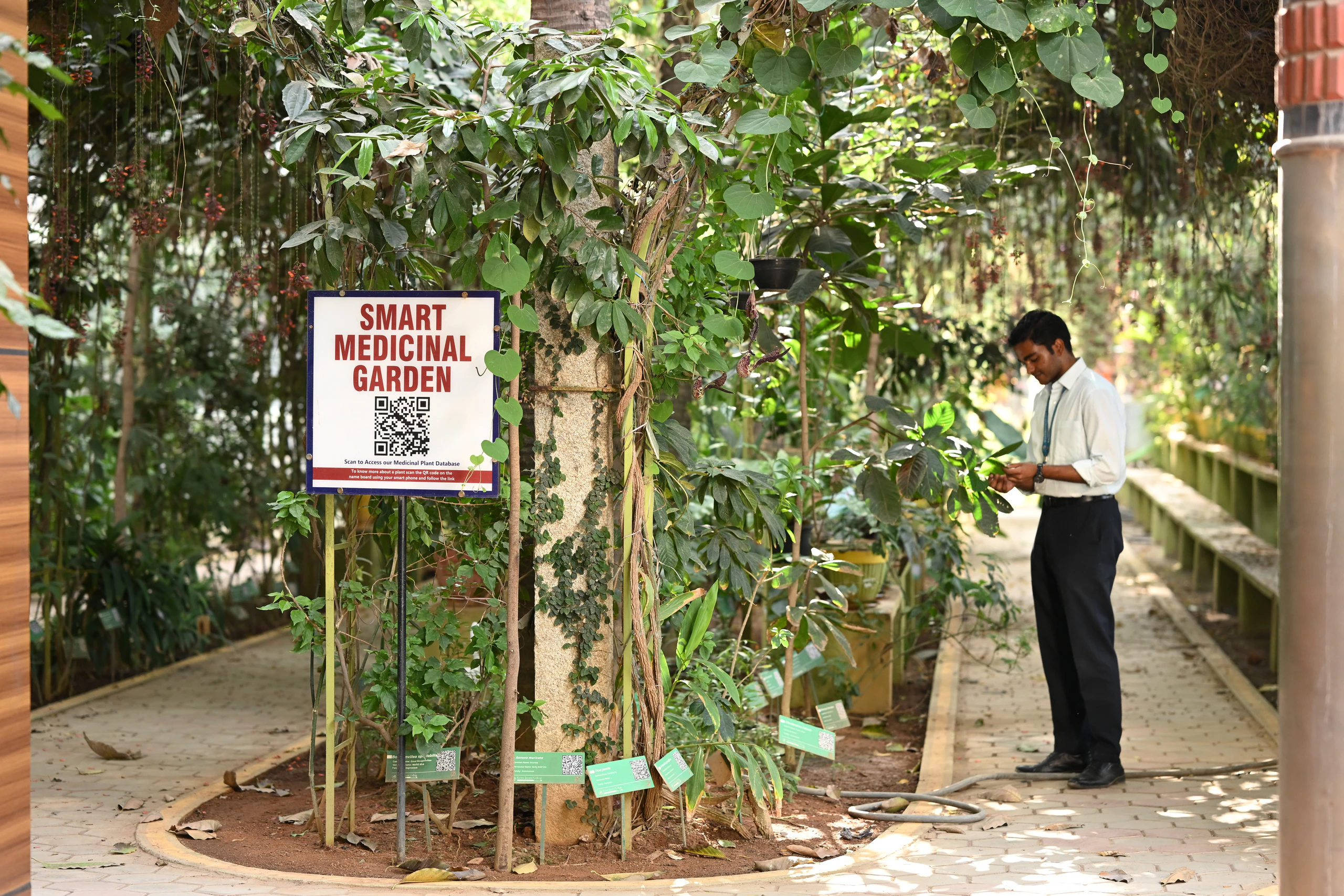
Kristu Jayanti University takes pride in its vibrant and sustainable campus, where more than 40% of the campus area is covered by lush greenery. The university’s commitment to environmental conservation is further reflected in its well-maintained medicinal garden, which houses more than 243 species of plants with significant ecological, scientific, and medicinal value. The garden serves not only as a green space but also as a living repository for learning, research, and environmental awareness.
The development and maintenance of the medicinal garden have been made possible through the active and equal involvement of students and faculty members of the Life Science Department and the Centre for Environment and Sustainability, with continuous support from the University Management. Their collaborative efforts reflect the institution’s commitment to creating a culture of environmental responsibility, experiential learning, and sustainable development.
Smart QR Code Technology
One of the distinctive features of the medicinal garden is its innovative use of technology. Each plant has been assigned a unique QR code, enabling students, staff, researchers, and visitors to instantly access detailed information about the plant using a mobile device.
By scanning the QR code, users can explore important scientific information, including the plant’s scientific name, botanical classification, morphology, phytochemical properties, medicinal significance, and traditional and contemporary medicinal uses. This initiative effectively integrates technology with biodiversity conservation and creates an interactive learning experience for visitors.
Educational & Research Ecosystem
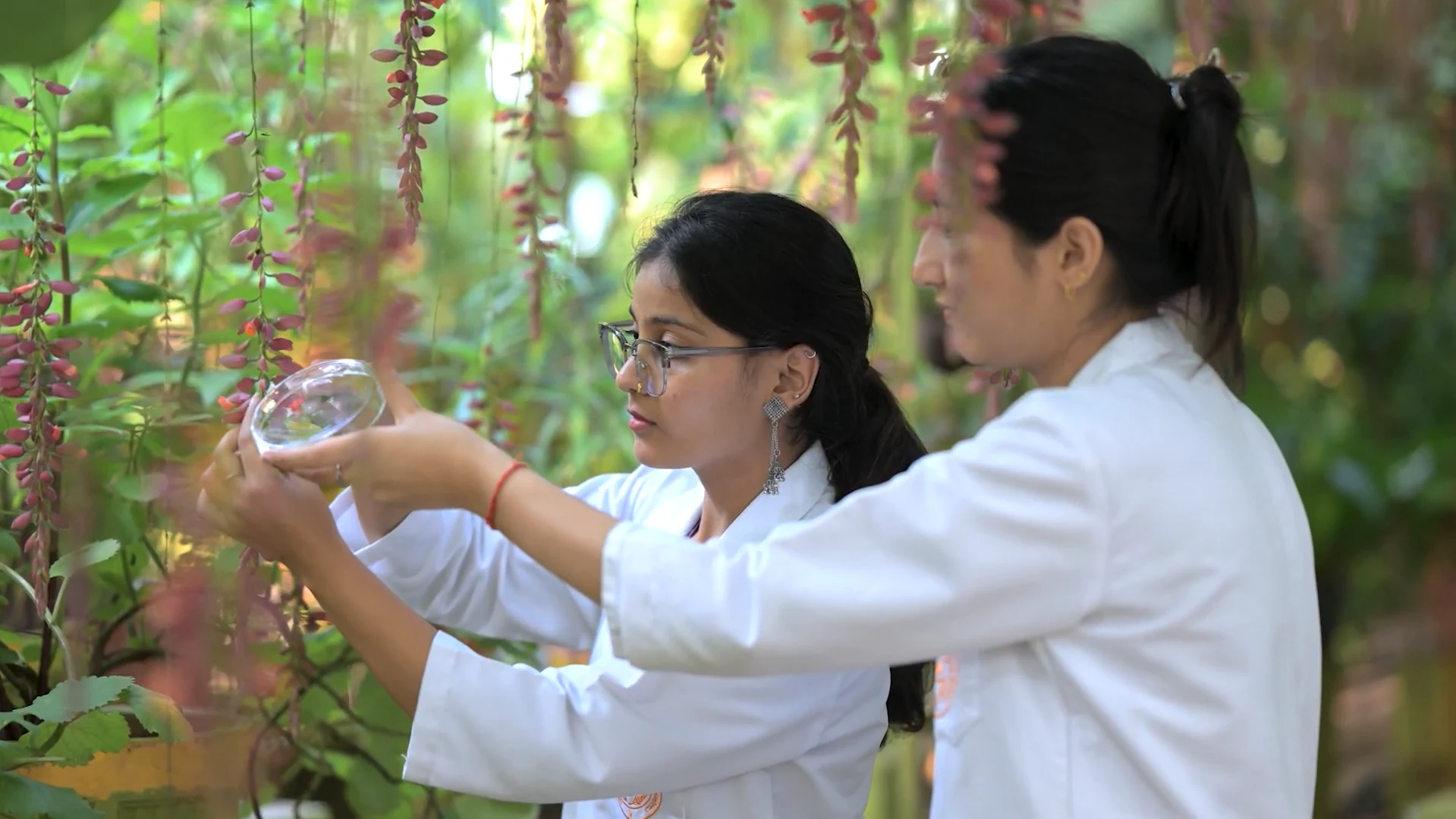
Students play an important role in the upkeep and development of the garden. They actively participate in identifying, documenting, nurturing, and maintaining medicinal plants, thereby gaining practical exposure beyond the conventional classroom environment. The garden also provides an excellent platform for students to undertake academic projects, field studies, research activities, and experiments related to medicinal plants, biodiversity, phytochemistry, conservation, and sustainable practices. The medicinal garden has therefore evolved into an educational and research-oriented space where students can connect theoretical knowledge with real-world applications. It encourages them to understand the importance of plant diversity and the role of medicinal plants in human health, traditional knowledge systems, ecological balance, and sustainable living. The garden also provides opportunities for interdisciplinary learning by bringing together aspects of life sciences, environmental studies, biotechnology, health sciences, and technology.
Speaking about the initiative, Fr. Dr Augustine George, Vice-Chancellor, highlighted its importance in creating greater awareness about the natural wealth surrounding us. He stated that the initiative would help young people discover the diversity and medicinal significance of plants while encouraging them to develop a deeper appreciation for nature and its conservation.
Through this initiative, Kristu Jayanti University continues to demonstrate that sustainability can be integrated into education in meaningful and innovative ways. The medicinal garden stands as a living example of the university’s efforts to promote environmental consciousness, preserve plant diversity, encourage student-led learning and research, and inspire the younger generation to become responsible custodians of the environment.